
Which Epoxy Floor Is Right for Your Space? A Breakdown of Every Major Type
The type of epoxy floor you choose determines how it looks, how long it lasts, and how much maintenance it demands for years after installation. Solid color, flake, metallic, and self-leveling systems are all "epoxy" — but they perform differently, cost differently, and suit different spaces. Picking the wrong one isn't a disaster, but it is an expensive do-over.
We've installed every major epoxy system across garages, commercial kitchens, warehouses, and residential interiors throughout the Austin metro. What we've learned is that most homeowners and business owners come in knowing they want epoxy, but aren't sure whicht type fits their space. Our complete guide to epoxy flooring covers the full picture — this post zeroes in on the type decision specifically, because it's where most people get stuck.
Solid Color Epoxy: The Clean, No-Fuss Option
Solid color epoxy is exactly what it sounds like — a single, uniform color applied as a base coat with a clear protective topcoat. It's the most straightforward system and the easiest to price, which makes it a common first instinct for people who just want a clean, functional floor without a lot of visual complexity.
It works well in commercial spaces where clarity and professionalism matter more than decoration — think mechanic's offices, storage facilities, or back-of-house areas in restaurants. It also suits homeowners who want a tidy garage without drawing attention to the floor itself.
The main trade-off: solid color shows dust, tire marks, and minor surface scratches more visibly than textured systems. In a working garage where cars come and go daily, that means more frequent cleaning to keep it looking sharp.
Pro Tip: If you're going solid color in a garage, ask your installer about adding a light anti-slip aggregate to the topcoat. It improves traction when the floor is wet and breaks up the flat sheen slightly, which actually makes minor scuffs less noticeable over time.
Flake Epoxy: The Most Popular System We Install
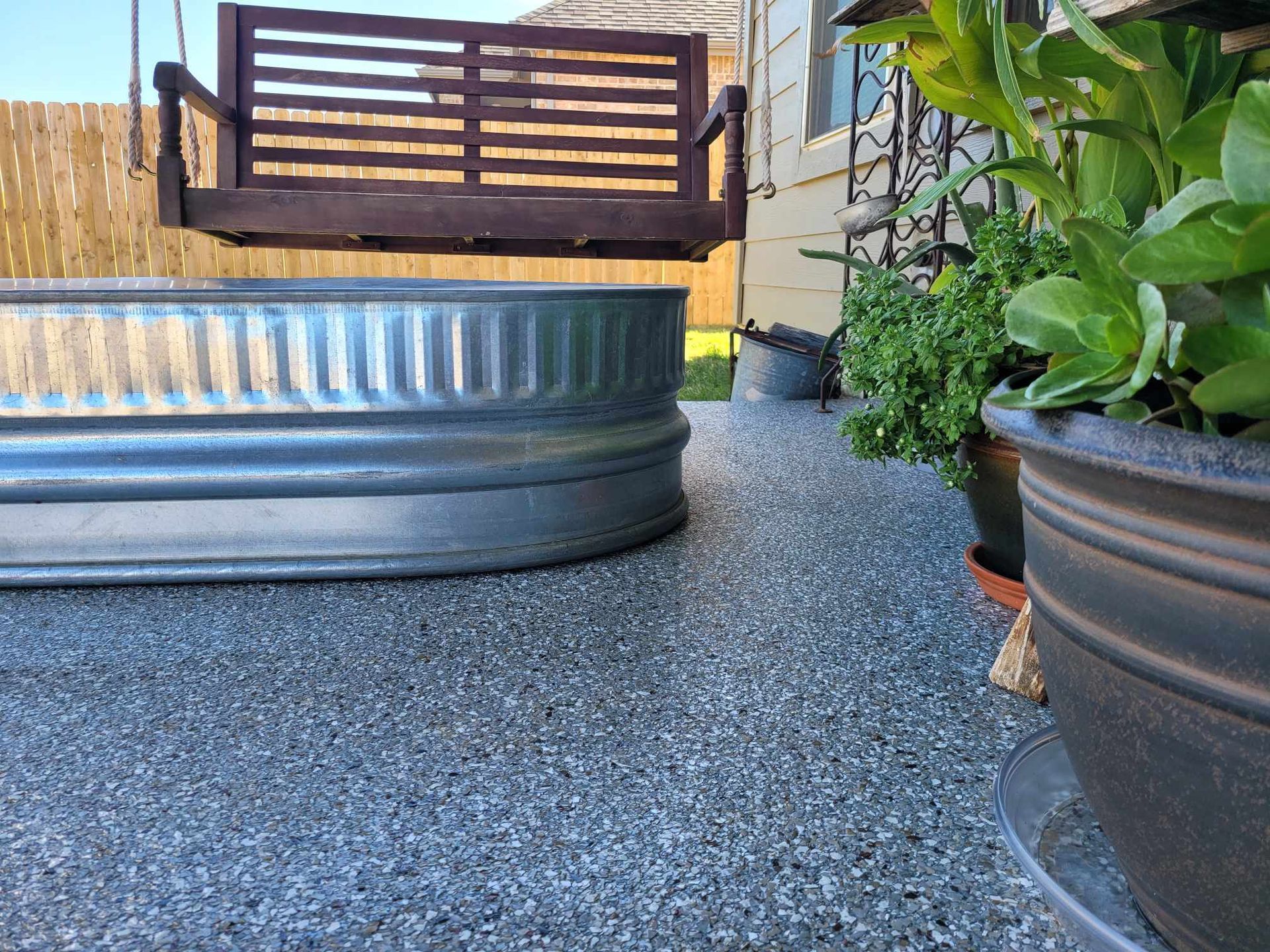
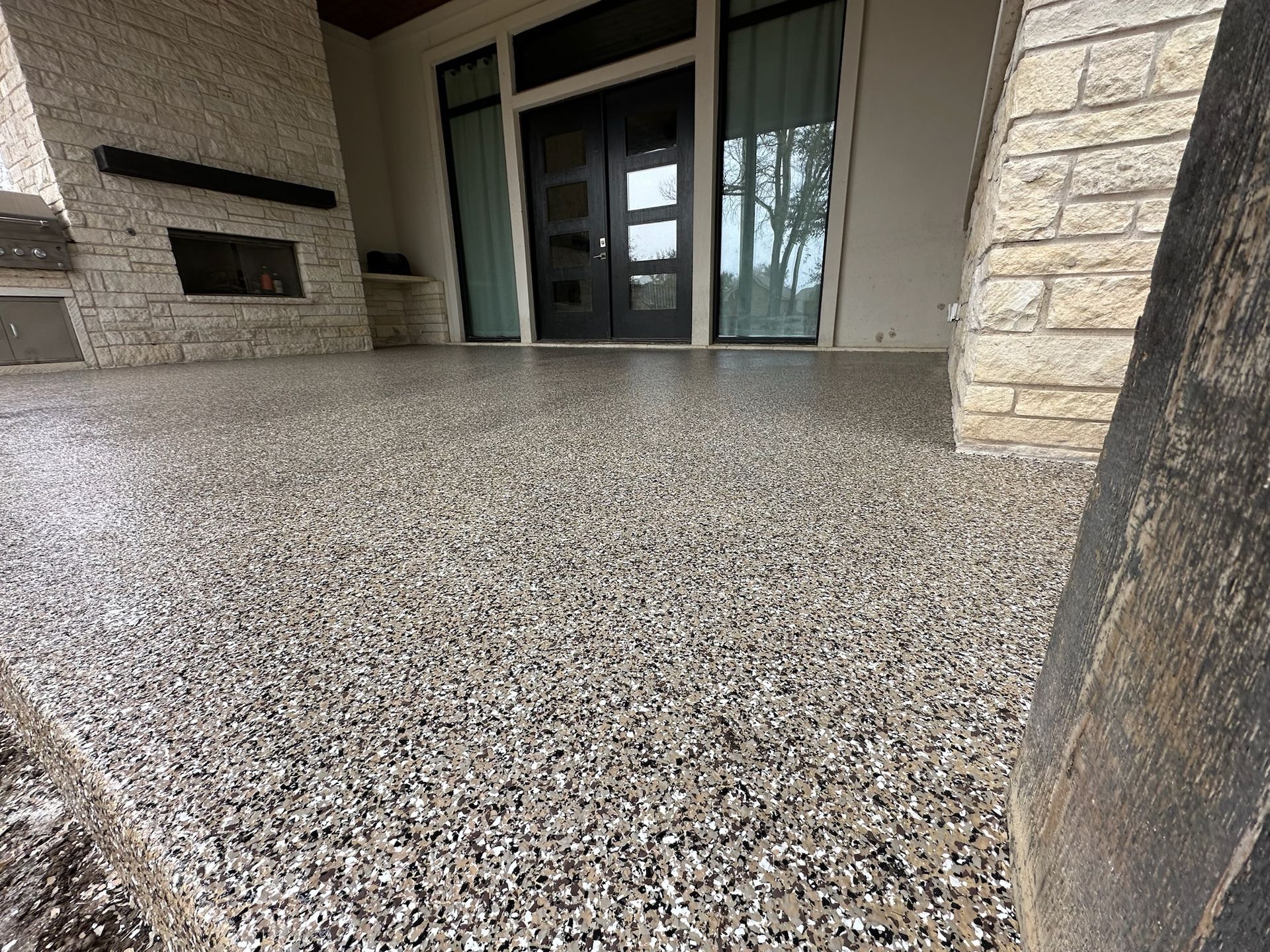
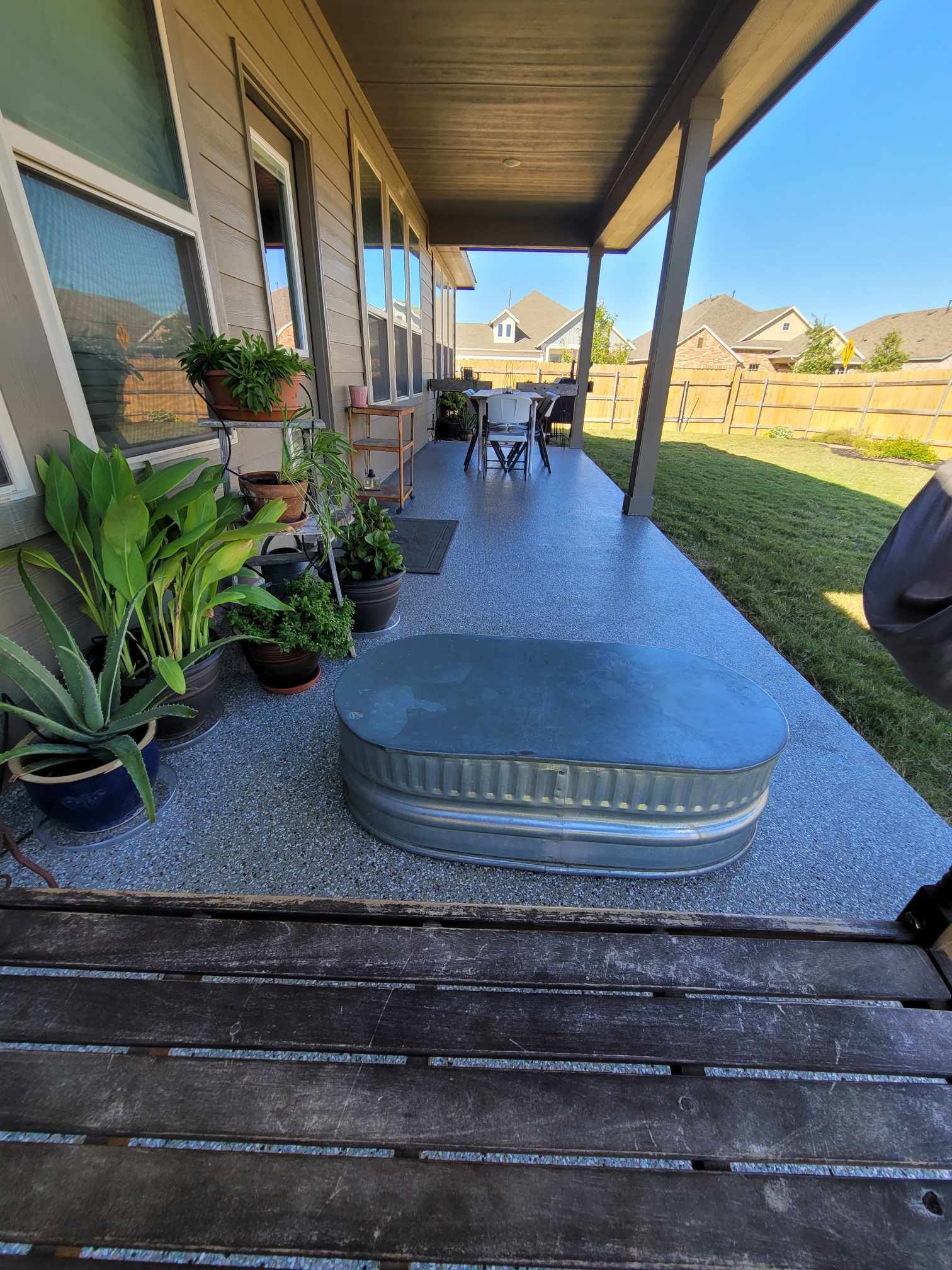
Flake epoxy — also called chip or broadcast epoxy — involves scattering vinyl color chips into the wet base coat before the topcoat seals them in. The result is a multi-toned, textured surface that looks professional and handles real-world use better than solid color in most residential applications.
The practical advantages of flake over solid color are real. The texture adds natural traction. The multi-color pattern hides dust, light debris, and minor scuffs between cleanings. And because no two installs look identical — chip size, blend, and broadcast density all vary — the finish feels custom even at a standard price point.
For residential garages, this is our most common recommendation. It hits the right balance of durability, aesthetics, and value, and it holds up well under the mix of foot traffic, vehicle use, and occasional spills that a working garage produces.
Did You Know? Broadcast density — how heavily the chips are scattered — significantly changes the final appearance. A full broadcast (chips edge to edge) looks completely different from a partial broadcast where the base coat color shows through. Always ask to see actual project photos at the density you're considering, not just a sample chip.
Metallic Epoxy: High-Impact Aesthetics for the Right Space
Metallic epoxy uses pigmented pearl or metallic powders mixed into a clear epoxy base to create a flowing, three-dimensional finish. The effect is genuinely striking — no two floors look alike, and the depth of the finish changes with viewing angle and lighting. It's the system people photograph.
It's also the most technically demanding system to apply. The metallic pigment movement has to be manipulated during installation to create the intended effect, and mistakes at that stage are difficult to correct. An installer with limited metallic experience can produce results that look muddy or flat rather than luminous. This is a system where the contractor's portfolio matters more than their price.
The right spaces for metallic: showrooms, high-end residential garages used as display or entertainment spaces, retail environments, and commercial lobbies where the floor is meant to be noticed. It's not the right call for a utility shop floor where tools get dropped and forklifts roll through. For a detailed look at what professional metallic installation actually involves — mixing ratios, pigment manipulation, timing, and topcoat selection — National Concrete Polishing's metallic epoxy application guide is one of the more thorough technical resources available.
Cost reflects the complexity. Metallic systems typically run $1–$3 per square foot more than a comparable flake system. For spaces where the visual impact is part of the point, it's usually worth it.
Self-Leveling Epoxy: Built for Commercial and Industrial Demands
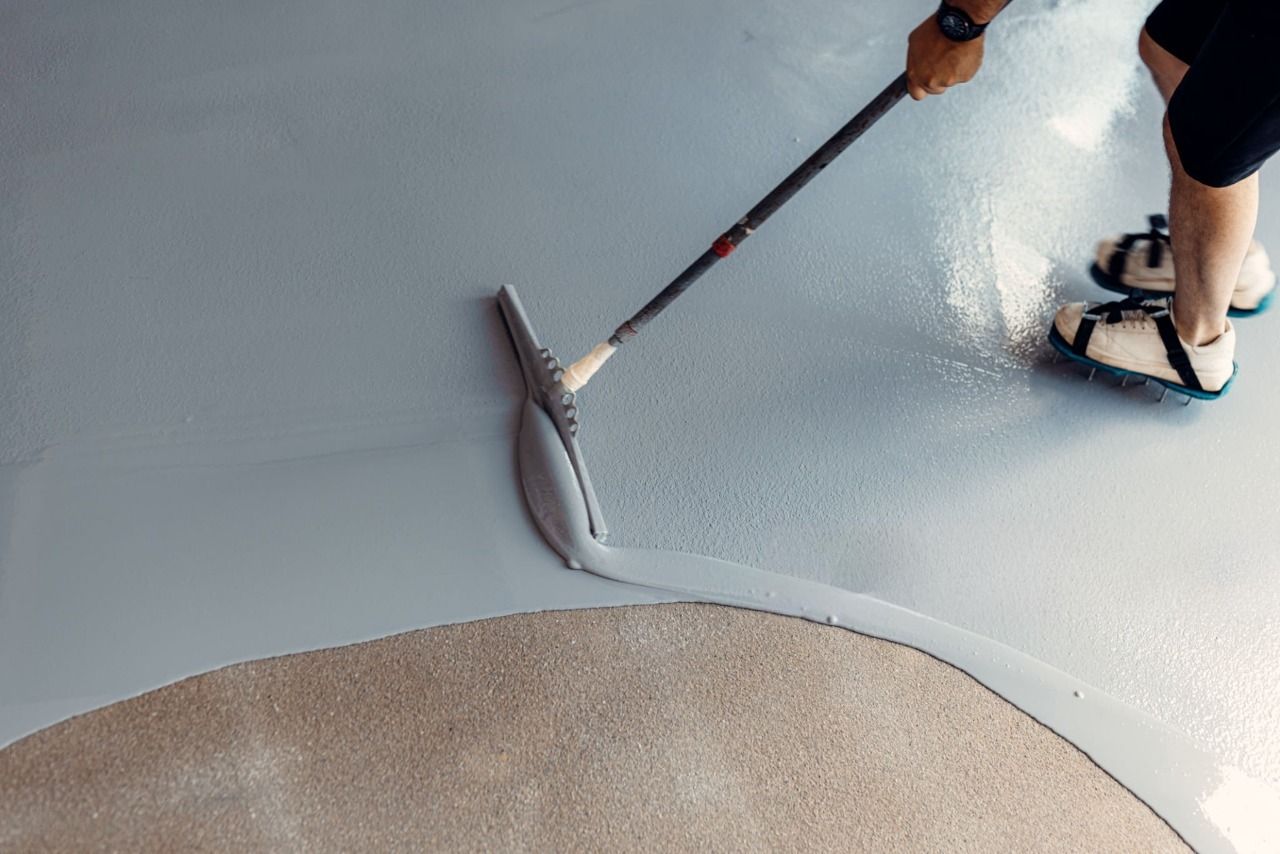
Self-leveling epoxy is poured at a higher volume and allowed to spread and flatten across the slab under its own weight. The result is a seamless, mirror-smooth surface with no texture variation — which is exactly what's needed in environments where sanitation, chemical resistance, and flatness are non-negotiable.
Food processing facilities, commercial kitchens, pharmaceutical manufacturing, and healthcare settings all use self-leveling systems for the same reason: a seamless surface with no seams or texture traps means easier cleaning and better compliance with health and safety standards Stonhard's self-leveling flooring overview is a useful reference for the industries where this system is the standard spec.
This system isn't typically specified for residential use. The material and installation cost is higher, the process is more involved, and the ultra-smooth finish can be slippery underfoot without additives — which is manageable in a controlled commercial setting but less practical in a family garage. For commercial projects specifically, our porch and patio coating service uses the same high-performance polyaspartic system in outdoor and transitional spaces where self-leveling epoxy isn't the right fit.
Did You Know? Self-leveling epoxy is often installed at 1/8-inch thickness or more — significantly thicker than standard residential systems. That depth adds to both the cost and the durability, making it well-suited for forklifts, pallet jacks, and other heavy equipment that would damage thinner coatings quickly.
Mortar Epoxy: When the Concrete Needs Serious Help
Mortar epoxy deserves mention because it shows up in projects where the concrete itself is in rough shape. It combines epoxy resin with graded sand or quartz aggregate to create an extremely thick, impact-resistant coating that can be used to level damaged or deteriorated concrete before a finish coat goes down.
It's not a decorative system — mortar epoxy is a functional one. You'll see it in industrial environments handling heavy impact loads, or as a repair layer on slabs with significant surface degradation that would otherwise prevent a clean finish coat from bonding properly.
For most residential and light commercial projects, it won't come up. But if a contractor recommends it as part of your scope, it's worth understanding what they're solving for.
Matching the System to the Space
Here's a practical reference before you call anyone:
| System | Best For | Avoid If |
|---|---|---|
| Solid Color | Commercial interiors, low-traffic spaces | High-traffic garages, dust-heavy environments |
| Flake/Chip | Residential garages, retail, schools | Ultra-high-end showrooms wanting a unique look |
| Metallic | Showrooms, display garages, lobbies | Utility environments, budget-sensitive projects |
| Self-Leveling | Commercial kitchens, labs, healthcare | Residential use, projects needing fast turnaround |
| Mortar | Damaged concrete repair, industrial floors | Surface-level decorative applications |
For a wider look at how installed costs break down across system types and garage sizes, HomeGuide's 2026 epoxy flooring cost data gives useful national benchmarks to compare against your local quotes.
How to Choose Without Overthinking It
Start with the use case — not the aesthetic. A floor that looks great but doesn't suit how the space is actually used is just a delayed problem.
For most residential garages: flake. For commercial or industrial: self-leveling or mortar depending on demands. For spaces where the floor is part of the experience: metallic. For simple, budget-conscious projects: solid color.
If you're unsure, an in-person assessment answers the question faster than any amount of online research. The concrete condition, lighting, traffic patterns, and use case all inform the recommendation in ways that a square footage estimate can't.
The Right Epoxy Floor Starts With the Right Conversation
Contact Heritage Floor Coatings for a free assessment and we'll match you to the right system — whether that's a standard flake garage floor or something more specialized. And if you're still weighing whether epoxy is the right direction at all, our complete guide to epoxy flooring covers the full cost, installation, and maintenance picture before you commit.
Frequently Asked Questions
What is the most popular type of epoxy flooring?
Flake or chip epoxy is the most widely installed system for residential and light commercial use. It offers a good balance of durability, aesthetics, and cost, and its multi-color texture hides dust and minor scuffs better than solid color systems, making it practical for working garages and retail spaces.
What type of epoxy flooring is most durable?
Mortar epoxy is the most impact-resistant system available, commonly used in industrial settings where heavy loads and equipment are a daily reality. For residential and light commercial applications, 100% solids flake or self-leveling systems installed over properly prepared concrete deliver the best long-term durability.
Is metallic epoxy flooring worth the extra cost?
It depends on the space. For showrooms, display garages, or commercial environments where the floor contributes to the overall impression, the higher cost is usually justified. For utility spaces where function matters more than aesthetics, the premium typically isn't worth it — a quality flake system performs just as well at a lower installed price.
How long does each type of epoxy flooring last?
All professional epoxy systems installed on properly prepared concrete typically last 5–10 years in residential settings. Metallic and self-leveling systems can run longer with careful maintenance. Consumer-grade kits, regardless of type, typically fail within 1–3 years due to lower solids content and inadequate surface preparation.
Can I switch epoxy types if I want to change the look later?
In most cases, yes — a professional can mechanically prep the existing surface and apply a new system over it, though this adds cost compared to a fresh installation. Full removal is sometimes necessary if the existing coating has delaminated or is incompatible with the new system's chemistry.
Share
You might also like